


can't trust AI
here's why
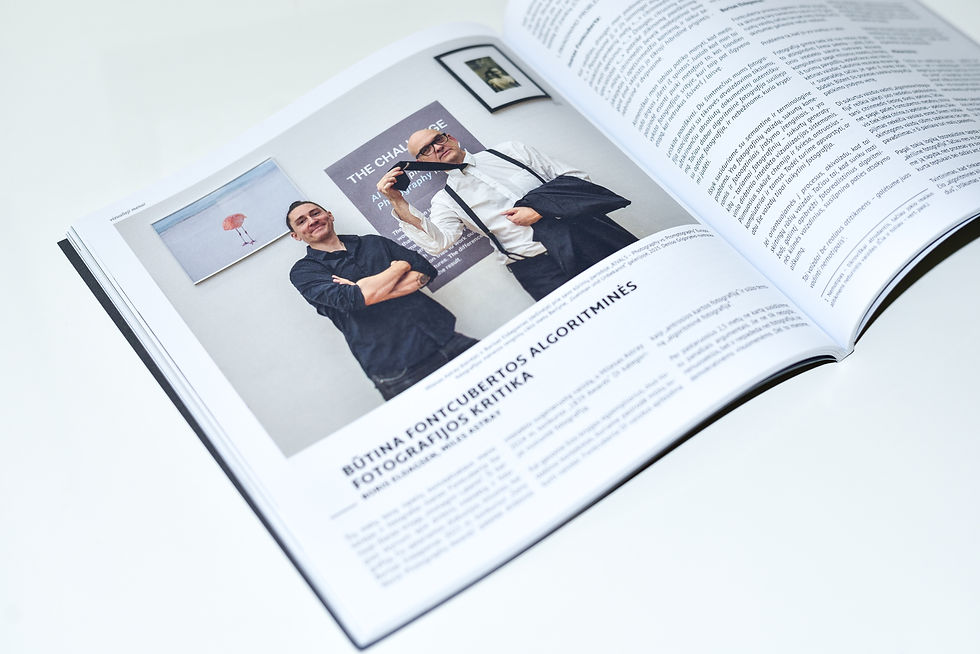
"You are a true writer," my friend and fellow artist Boris Eldagsen told me the other day, after he'd read my essay Lost in Latent Space. Meaningful flattery—thank you very much—because those who know me through my viral photographic work, might not always know me as a writer.
The truth is that I'm a writer, photographer, and traveler, home at that very intersection (and—as a nomad of 14 years—nowhere else really).
That's why I'm glad that Boris and I recently saw our co-authored essay on the dichotomy of photography and AI published by 9 Lives Magazine in France and Nemunas Press in Lithuania after its initial publication in the US via PetaPixel—thanks again, Boris.
Accompanied by our images, our urgent words are traveling around the world and across languages, and obviously that's right up my alley.
What's down the road, on the other hand, isn't really my thing. Because you know who isn't a true writer, in any sense of the word? AI. But I'll get to that in a minute.
the feel of reality

As a nomad, I'm no stranger to the digital realm. But my home is the real world. And no screen can beat the feeling of touching a magazine with my published work—something textured and wavy, something that casts a shadow.
who the fake is Miles Astray van de Watering
I keep getting the question how AI is affecting my artistic practice, and all I can say is that it isn't. At all. The machine can neither help with my work, nor replace it. My artistic practice is to travel the world slowly and locally, and share these impressions and lessons candidly. AI can't do any of that.
And what it can do—summaries and modifications—it doesn't do well enough to be trustworthy. Here's a little anecdote with big implications: the other day, Google's Gemini AI added an appendix to my name without any prompting (the search was simply for "Miles Astray"):

Now, you might think this hallucination is an outlier. It's not. According to a BBC investigation, AI misrepresents information about half the time. For Google's Gemini it's even the norm with 76 %. Let that sink in: most of the time you Google something, the AI overview contains mistakes.
I asked around on social media to gather explanations for this kind of AI tripping, and got some interesting responses that you can find here.
Then I asked Gemini itself to explain the blunder, and its baffling answer is a must!!!-read that will show you how the machine's inner workings limit the truth you get out of it. Makes you realize that you never ask AI anything—you prompt it, and that's a crucial distinction. Flip through the slides to see for yourself:
If you can't even trust your friendly neighborhood search engine, you might want to consume social media with snowball-sized grains of salt. A while back, I mentioned that abomination of a post where they stitched an AId version of my face together with a butchered caption. Now there's more:
Some of AI’s hallucinations and half-truths might seem benign, but the implications are severe: you can’t trust any AI-generated information, and you can’t trust that information isn’t AI-generated as AI content proliferates across the information economy.
writing truths
When we consume information, trustworthiness originates from the source. The only sources I still trust to do due diligence—to a fair degree—are legacy media and academia. That's why I'm always glad to find my work discussed there. Most recently in ARTS REVIEW, a peer-reviewed journal published by the Taipei National University of the Arts.
"I have learned a great deal from your work, and it has also been very inspiring for my teaching."
Chu Yin-hua
Associate Professor
National Taipei University of Education
latest content
Check out some of my latest words, lines, passages, and essays for some candid writing and photography:



So long,
Miles


